What Mirror Works Best in a Windowless Bathroom?
Designing a windowless bathroom presents unique challenges, especially when it comes to lighting and mirror selection. Without natural light, the bathroom's illumination hinges entirely on artificial sources — making the choice of mirror not only an aesthetic decision but a functional one. This post dives into the nuances of selecting the ideal mirror for a windowless bathroom, balancing form, function, and lighting. We’ll discuss mirror types, sizing rules related to lighting layouts, placement heights, and how to integrate task and ambient lighting effectively. We’ll also reference industry standards from the National Kitchen & Bath Association (NKBA) and suppliers like Golden Lighting and Lumens to help you make the best informed choices.
Understanding the Challenge of Windowless Bathrooms
Without a window to provide natural daylight, windowless bathrooms can feel claustrophobic or dim if lighting and mirrors aren’t carefully planned. Key issues include:
- Brightness: Artificial light must replicate natural daylight for comfort and accurate color rendering.
- Reflection: Mirrors help bounce light around the space but must be sized and placed thoughtfully.
- Humidity: Windowless bathrooms tend to have higher moisture retention, so mirror materials and installation must withstand this environment.
Balancing a bright, welcoming atmosphere with durability and practicality hinges on understanding mirror types, lighting needs, and installation parameters.
Mirror Types as Functional Decisions
In windowless bathrooms, selecting the right mirror type involves more than shape and style. Consider these functional attributes:
Shape & Size
Traditional wisdom has favored large rectangular mirrors, especially in bathrooms with flanking wall sconces. The National Kitchen & Bath Association (NKBA) recommends mirror sizes that approximate vanity width but reflect practical lighting needs — not just decorative scale.
- Rectangular mirrors: Ideal for focused task lighting. Allows for symmetrical sconce placement on either side, ensuring even illumination and reducing shadows.
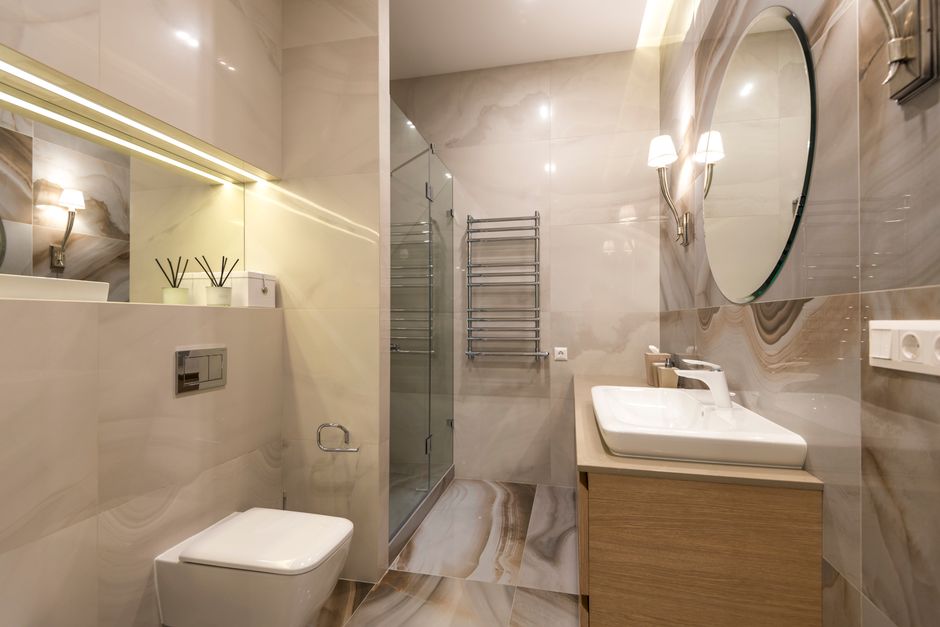
- Round or oval mirrors: Trendy but often problematic in windowless setups. They typically crowd wall sconces due to limited side clearance, reducing effective task lighting.
Storage Considerations
Storage-integrated mirrors — like mirrored medicine cabinets — may sacrifice larger reflective areas but add value in small bathrooms. However, remember that access fluctuates with mirror size, and added protrusion can affect lighting fixture placement.
Mounting & Installation
The mirror mounting method impacts durability, especially in humidity-prone windowless bathrooms. A glazier plays a key role here by templating and installing plate glass mirrors precisely, ensuring sealed edges to prevent moisture infiltration that causes delamination or silvering.
Lighting Integration
The single most transformative mirror feature for windowless bathrooms is integrated lighting. Let’s break down options:
- Front-lit mirrors: LEDs positioned around the mirror's front edge provide flattering light but can cause glare or hot spots if not properly diffused.
- Backlit LED mirrors: Golden Lighting and Lumens offer backlit LED mirrors that emit soft, ambient light from behind the mirror surface — an excellent choice for windowless bathrooms aiming for ambient evening light without harsh shadows.
Backlit LED mirrors also score higher for CRI (Color Rendering Index), with many models claiming CRI 90 bathroom lighting or above, meaning colors—and skin tones—appear more natural and vibrant in artificial light.
Sizing Rules Linked to Lighting Layout
Before deciding on mirror width or shape, always finalize the lighting layout first. This is a personal quirk I live by: Lighting before mirror width. Oversized mirrors can crowd flanking sconces or force suboptimal placement, undermining the lighting scheme.
Vanity Width Recommended Mirror Width Allowable Clearance for Wall Sconces (each side) Notes 24" or less 20"–22" 3"–5" Leave room for sconces to avoid glare 36" 28"–32" 4"–6" Balanced scale with task lighting 48" or more 40"–44" 5"–7" Makes room for double sconces or larger fixturesThis sizing ensures that the wall lights, essential for task lighting, flank the mirror with appropriate spacing https://www.architecturelab.net/types-of-bathroom-mirrors/ to illuminate the face without harsh shadows — critical in windowless bathrooms with no daylight.
Placement Heights and Sconce Spacing
The NKBA sets clear standards for mounting mirrors and sconces in bathrooms where lighting quality must compensate for the lack of natural light.
- Mirror height: Bottom edge should be approximately 40 inches from the floor; top edge reaches between 75 and 80 inches, depending on ceiling height and user average height.
- Sconce height: Mount sconces so the center of the light source is 65 to 70 inches above the finished floor, roughly at eye level when standing.
- Distance from mirror edge: Allow 4 to 6 inches clearance from the mirror edge to the centerline of the sconce, as noted in the sizing table.
- Spacing: Sconces should be spaced adequately apart to avoid concentrated glare but close enough for even illumination. For wider vanities, two pairs of sconces or larger fixtures may be needed.
In windowless bathrooms, these careful placement guidelines help balance shadow control and task illumination for grooming and makeup applications.
Task Lighting vs Ambient Lighting in Windowless Bathrooms
Understanding the difference between task and ambient lighting underpins smart mirror and fixture choices.
Task Lighting
Focused, high-intensity light intended for activities like shaving or makeup application. Task lighting needs to minimize shadows on the face, favoring:
- Wall sconces flanking the mirror at face height
- High CRI LED sources (CRI 90 or above) to render colors accurately under artificial light
- Front-lit or evenly diffused sources
Ambient Lighting
General illumination that fills the room and reduces harsh contrasts. In windowless bathrooms, ambient lighting is often supplied by ceiling fixtures or, increasingly, backlit mirrors emitting soft glow:
- Backlit LED mirrors from providers like Golden Lighting and Lumens excel at ambient evening light bathroom scenarios.
- These mirrors reduce the need for ceiling recessed lights or can complement them for layered illumination.
- Backlighting reduces eye strain and visually expands tight, windowless spaces.
When specifying lighting circuits, coordination with a licensed electrician is essential — especially for hardwired LED mirrors that require dedicated feeds or integration into existing lighting zones.
Durability and Installation Details to Keep in Mind
Windowless bathrooms trap moisture longer, so mirror edges must be sealed, preferably by a skilled glazier using a templated plate glass installation method. Avoid framed mirrors with porous or cheap materials that degrade quickly. Demister pads behind mirrors are a smart addition in these spaces to prevent fogging during steamy showers.
Fans and ventilation are the unsung heroes of mirror durability — inadequate exhaust fans exacerbate silvering, peeling, and mold growth. Coordinating with mechanical trades during remodel documentation is critical.
Summary and Recommendations
- Choose backlit LED mirrors: They deliver superior ambient lighting and help compensate for no natural light, with CRI 90+ for accurate color rendering.
- Size mirrors to suit your sconce placement: Don’t sacrifice lighting by picking oversized or oddly shaped mirrors that crowd wall lamps.
- Mount sconces and mirrors at NKBA-recommended heights: Sconces at 65-70” high and mirror bottom edge near 40” create optimal illumination zones.
- Use a glazier for precise, sealed mirror installation: Prevents moisture damage in windowless, humid environments.
- Work with electricians early: Plan for hardwired LED mirrors or supplemental lighting feeds; budget for integrated dimmers and smart controls where possible.
- Consider task vs ambient lighting layering: Backlit mirrors for ambient evening light bathroom feel, plus wall sconces for sharp task lighting balance comfort and utility.
Windowless bathrooms demand thoughtful approach to mirror and lighting selection. By working with trusted suppliers like Golden Lighting and Lumens, following NKBA guidelines, and engaging trades often overlooked (glaziers and electricians), you can create a luminous, functional, and visually appealing space despite the absence of daylight.
Verdict: Backlit LED mirror yes. Oversized round mirror no. Demister yes. Dashboard maybe.