How to Shop for a Dining Table When You Have a Tiny Elevator
A dining table can look perfectly reasonable on a showroom floor and become a delivery-day problem the moment it meets your building’s elevator. In a small home, there’s a second challenge: the table has to fit not just through the elevator, but into the room without turning every meal into a chair-shuffling exercise.
After years of preparing furniture deliveries around Seattle, I’ve learned to plan the tightest turn first: from the curb to the lobby, through the elevator door, out at your floor, and into the dining area. A tape measure in your jacket pocket is more useful than optimism. So is a clear plan for what happens when the table is not in use, especially if you’re considering leaves or folding sides.
This guide will help you compare table styles, check the right dimensions, and build a delivery planning checklist before you buy. The goal isn’t merely to get a table upstairs. It’s to get one that works in your home on ordinary Tuesday nights, too.
Start with the Small-Home Reality
In a small apartment, the dining area usually has to do more than one job. It may also be a work surface, a landing place for bags, a spot for packages, or the only place to spread out a project. That flexibility can make a dining table valuable—but it also means every extra inch matters.
Think about the room in its everyday state, not only when it’s tidied for guests. Where do chairs go when nobody is eating? Will a table block a closet, a balcony door, or the route from the kitchen? If you buy an extending table, where will the leaves live? A leaf that has no proper storage spot often ends up leaning behind a sofa or under a bed, adding to the very overflow clutter you were trying to manage.
Before you shop, decide what the table needs to do most often. A compact two- or four-person setup that opens occasionally may suit you better than a large table marketed as seating six or eight. “Seats eight” is not a promise that eight people will be comfortable in your room. Seat count depends on table shape, chair width, leg placement, and the space people need to sit down and get back up.
Measure the Route Before You Choose a Table
The delivery route is a chain of openings and turns, not one elevator measurement. Measure from the curb or loading area all the way to the dining room. Check building rules, too: some elevators need to be reserved, and some buildings have delivery-hour restrictions or require protective padding.
Measure the elevator—and the parts around it
Record the elevator’s clear door opening: width and height with the doors fully open. Then measure the car’s usable interior depth, width, and height. Pay attention to handrails, light fixtures, control panels, and any protrusions that reduce usable space. The listed elevator size may describe the car’s overall dimensions, not the clear space available for a bulky carton.
When checking elevator depth width, don’t assume that a package that fits the car will also pass through the doorway. The object may need to enter at an angle, and that angle can be limited by the door opening, corridor width, or a tight turn just outside the elevator. Measure hallways, corners, stairwell landings, and the dining-room doorway as well.
Ask for the actual package dimensions
For a table delivered in a carton, the table packaging dimensions may matter more than the assembled tabletop dimensions. Request the dimensions of every box, not just the overall product size. A table might arrive with its top, base, legs, hardware, or leaves packed separately. Ask whether the carton is rigid, whether any parts can be removed from the packaging before the elevator ride, and whether the delivery team can unpack the item in a designated area.
Do not plan around a carton being tilted, flexed, or carried upright unless the retailer or delivery team confirms that the package and route allow it. A box may be physically long enough to fit diagonally in the elevator but still impossible to rotate through the hallway outside it. If a route is close, send the measurements and photos of the tightest turn to the delivery coordinator before placing the order.
What to measure Where to measure Why it matters Clear door opening Elevator, apartment, and any building doors The package must pass through the narrowest opening, not just fit inside the elevator. Interior depth and width Inside the elevator car, between obstructions These determine how the carton can sit or be maneuvered. Hallway and corner clearance At corridors, landings, and turns A long carton may fit in the elevator but fail at the next turn. Package length, width, and height For every carton listed by the retailer These are the dimensions the delivery team has to move through your route. Dining-room clearance Around the proposed table footprint The table must work in the room after it has been delivered.Measure the Room for Daily Use
Once the delivery route looks possible, plan the table footprint. Mark the tabletop dimensions on the floor with painter’s tape. Place your actual chairs around the outline if you can. This quick test makes it easier to see whether chair backs will collide with walls, cabinets, or the walking path.
Allow room for chairs to pull out and for people to move behind them. The exact clearance you need depends on the chair, the wall, and whether people must pass through while someone is seated. Measure your own setup instead of relying on a generic “small space” label. Mentally count those chair-clearance inches as you enter the room: a table can fit on paper and still make daily use awkward.
Check the distance to nearby doors, drawers, and appliances. If a chair has to be moved every time you open a cupboard or walk to the kitchen, that’s part of the table’s real footprint. Also consider the route between the kitchen and table. A smaller tabletop may be the better choice if it keeps that path clear.

Compare Space-Saving Table Styles
Drop-leaf tables: flexible sides, not magic extra room
A drop-leaf table has one or more hinged sides that can be lowered when they’re not needed. With both leaves down, it may work as a narrow console or a compact everyday surface. Raise a leaf when you need more room for a meal or a project.
The trade-off is that the supports and hinges need clearance. patch.com Check how the leaf is held up, where the legs sit, and whether a raised side will hit a wall or chair. Some models are most useful against a wall; others need open space around the table. Look at the dimensions with each leaf down and fully raised, and test where chairs can sit in both positions.
Drop-leaf tables can be a good fit when you need a modest everyday footprint and occasional extra surface area. They do not automatically provide generous seating. Compare the usable edge space and leg placement, and make sure the open configuration fits the room before you buy.
Gateleg tables: generous opening, more moving parts
A gateleg table uses hinged legs that swing out to support one or both leaves. Folded down, it can be very compact. Opened up, it offers a larger surface than many narrow drop-leaf designs.
That flexibility comes with practical trade-offs. The swing-out legs need room, and the frame can be more complicated than a fixed-leg table. Check whether the legs interfere with chairs, and whether the table is stable in the configurations you plan to use. If you need to open and close it frequently, consider whether the mechanism feels manageable for the people in your household.
For either style, inspect the folded dimensions and the fully open dimensions. “Compact when folded” is only useful if the folded table has a sensible place to live and the open table still leaves room to walk.
Extending tables: plan the leaf before you fall for the table
An extending table can give you a small everyday footprint and more dining space for guests. But there are several mechanisms: leaves may store inside the table, attach at the ends, or need to be kept separately. Each option changes both daily convenience and storage planning.
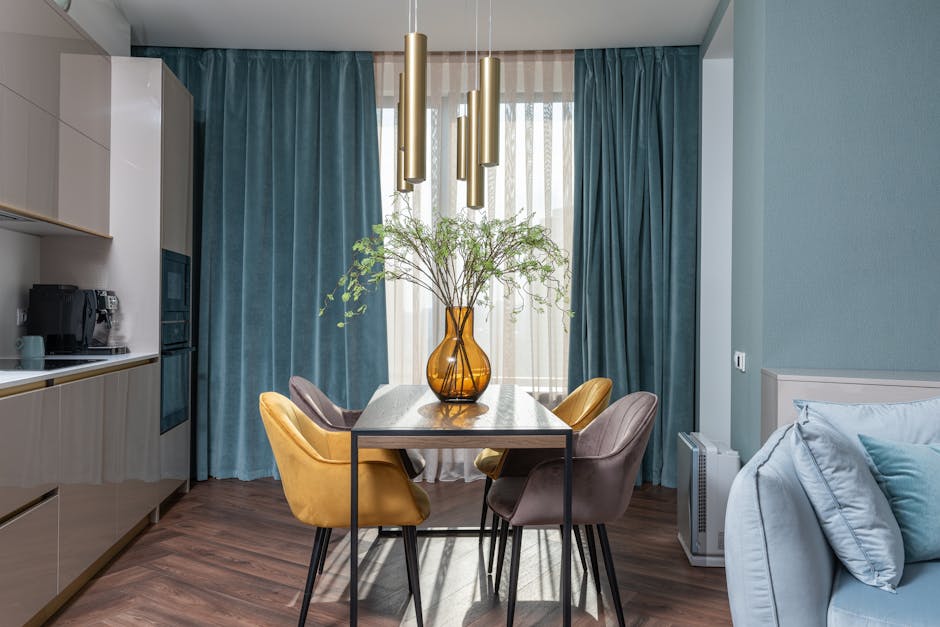
Ask for the table’s exact length when closed and when fully extended, including each available leaf configuration. Product descriptions that list only the closed length leave out the dimension you most need to test. Confirm how many leaves are included, whether all can be installed at once, and whether the extension changes the table’s width or leg position.
Then assign the leaves a real storage location. Measure that location, including the route needed to get the leaves in and out. A leaf stored under a bed may sound easy until you discover the bed frame leaves too little clearance, or that the leaf is too long to turn into the storage space. If leaves store inside the table, confirm that the feature is part of the specific model—not just a photo of a similar version.
Choose the Delivery Plan as Carefully as the Table
A table may be sold as “easy to assemble,” but assembly does not solve a carton that cannot pass through the elevator door. Find out whether the price includes room-of-choice delivery, unpacking, assembly, and removal of packaging. Ask what happens if the item cannot be carried through the planned route and whether there are additional fees for stairs, difficult access, or a return.
In Seattle buildings, curb access and loading arrangements can be as important as the elevator itself. Check whether the truck can stop near the entrance, whether your building has a loading area, and whether delivery staff need a reservation or instructions for entry. Tell the retailer about narrow hallways, low ceilings, stairs, and any elevator restrictions before delivery day.
Delivery planning checklist
- Measure elevator door width and height, plus usable interior depth, width, and height.
- Measure the full route from the loading area to the dining room, including the tightest turn.
- Get the dimensions of every table carton and confirm how the parts are packed.
- Measure the tabletop footprint in closed and fully extended configurations.
- Mark the table and chair positions on the floor and check pull-out and walking clearance.
- Identify a specific storage spot for each leaf, if the table has removable leaves.
- Confirm elevator reservations, delivery hours, building access, and curb or loading arrangements.
- Ask what delivery includes and what the procedure is if the package cannot fit.
- Keep your measurements, retailer specifications, and building instructions together for the delivery team.
Make a Confident Purchase
When you compare options, put the essential dimensions side by side: package size, elevator clearance, table size when closed, table size when open, and the floor space required for chairs. That comparison often makes the decision clearer than browsing photos. A beautiful table is not a good small-home choice if it blocks a doorway, has nowhere to store its leaves, or requires chairs to stay tucked in all the time.
If a measurement is close, pause and verify it rather than assuming the delivery team can “make it work.” A little extra planning can prevent a failed delivery, unexpected fees, or a table that dominates the room. Talk through the tightest turn from curb to dining room, confirm the table packaging dimensions, and test the everyday footprint with tape on the floor.
The best dining table for a tiny elevator is not necessarily the smallest one. It’s the table that can reach your home, fit the room, and adapt to how you actually live—without making your chairs, leaves, and daily clutter harder to manage.